
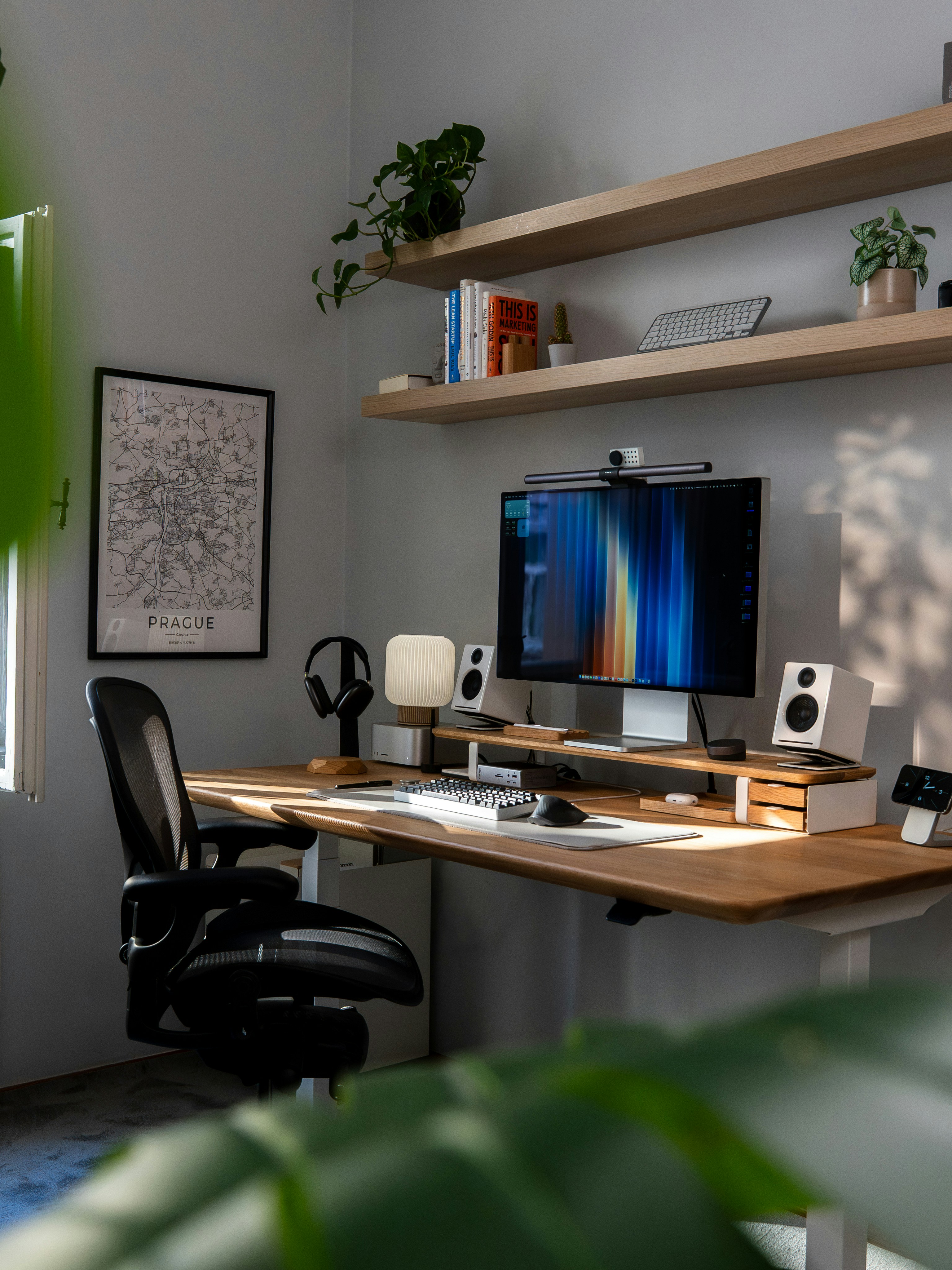
Most desks are functional. Fewer are healthy. The difference shows up after a few months of use — in posture, in productivity, and in how often the person at it is rubbing their neck. Here's what separates the two.
1. Real Surface Depth
A 24-inch-deep desk feels like saving space until you realize the monitor is too close, the keyboard is at the edge, and there's nowhere to set a notebook. A 30-inch-deep desk solves all of that. The difference is six inches and a totally different working day.
2. Cable Management That's Built In
Loose cables drape behind a desk, get tangled in chair wheels, and pull out of laptops at the worst moments. A desk with a built-in cable tray or grommet for power and data is one you can adjust without disconnecting the day's work.
3. Adjustable Height, Even Without Sit-Stand
Standard desks are 29-30 inches high. That's right for some people and too high for others. If a desk can't be adjusted at all, it can't fit different people — which matters when the chair adjustment can only go so far.
4. A Real Drawer Setup
One shallow drawer for stationery, one deeper for files. Sounds basic. A surprising number of modern desks ship with no drawers at all, and the result is clutter on the desktop and a missing legal-pad you need right now.
5. A Footprint That Actually Fits
Measure the space, including chair pullback, walking room behind, and any door swings. A desk that fits the room but blocks every path is the kind of mistake that's hard to undo. Layout before purchase, every time.
6. Edge Profile and Material
Sharp edges cut into forearms during long days of typing. A softened edge — laminate or wrapped — is more comfortable. Material matters too: melamine takes scratches faster than a real wood veneer, but veneer is more sensitive to liquids. Choose for the conditions.
If you're planning a workspace refresh — even a small one — our team is happy to come walk the space and talk through options that fit your budget and timeline.
